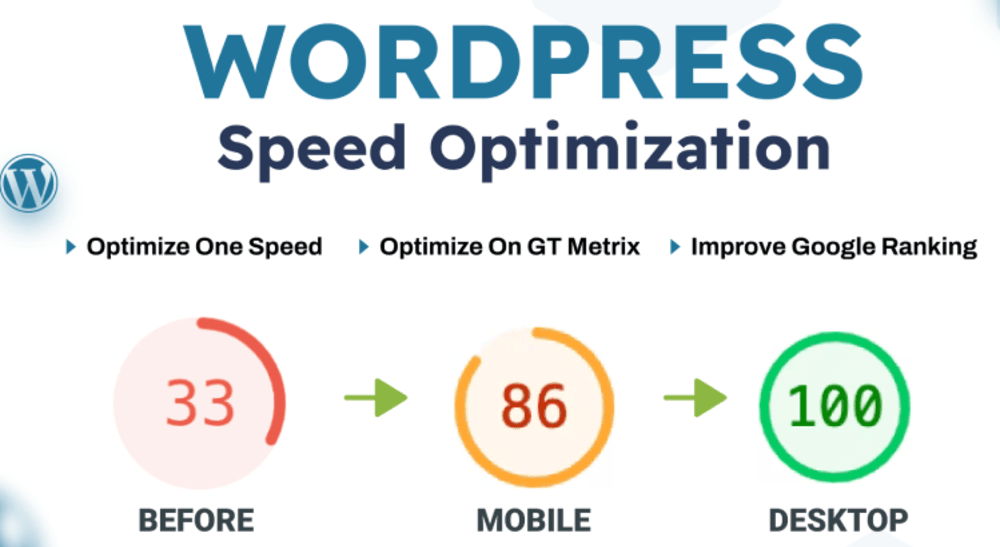
In the modern digital landscape, a website is no longer just an online brochure; it is a direct driver of business revenue. However, even the most beautifully designed WordPress website will fail to convert if it takes more than a few seconds to load. Today, WordPress speed optimization is not just a technical luxury—it is a foundational ranking factor that directly dictates your visibility on search engine result pages (SERPs).
The Psychology of Mobile User Experience and Bounce Rates
User attention spans are shorter than ever. Studies show that if a mobile page takes longer than 3 seconds to load, over 53% of users will abandon the site. This sudden exit triggers a high bounce rate, sending a negative signal to search engine algorithms.
When Google notices that visitors are immediately clicking back to the search results, it concludes that your website provides a poor mobile user experience. Consequently, your organic rankings plummet, and your competitors claim the top spots.
Decoding Google's Core Web Vitals
In recent core updates, Google made it explicitly clear that user experience metrics, known as Core Web Vitals, are critical ranking signals. To rank well, your WordPress site must pass three specific benchmarks:
Largest Contentful Paint (LCP): Measures loading performance. The main content of your page must load within 2.5 seconds.
Interaction to Next Paint (INP): Measures visual responsiveness. The site must react instantly when a user clicks a button or menu.
Cumulative Layout Shift (CLS): Measures visual stability. Elements should not jump around on the screen while loading.